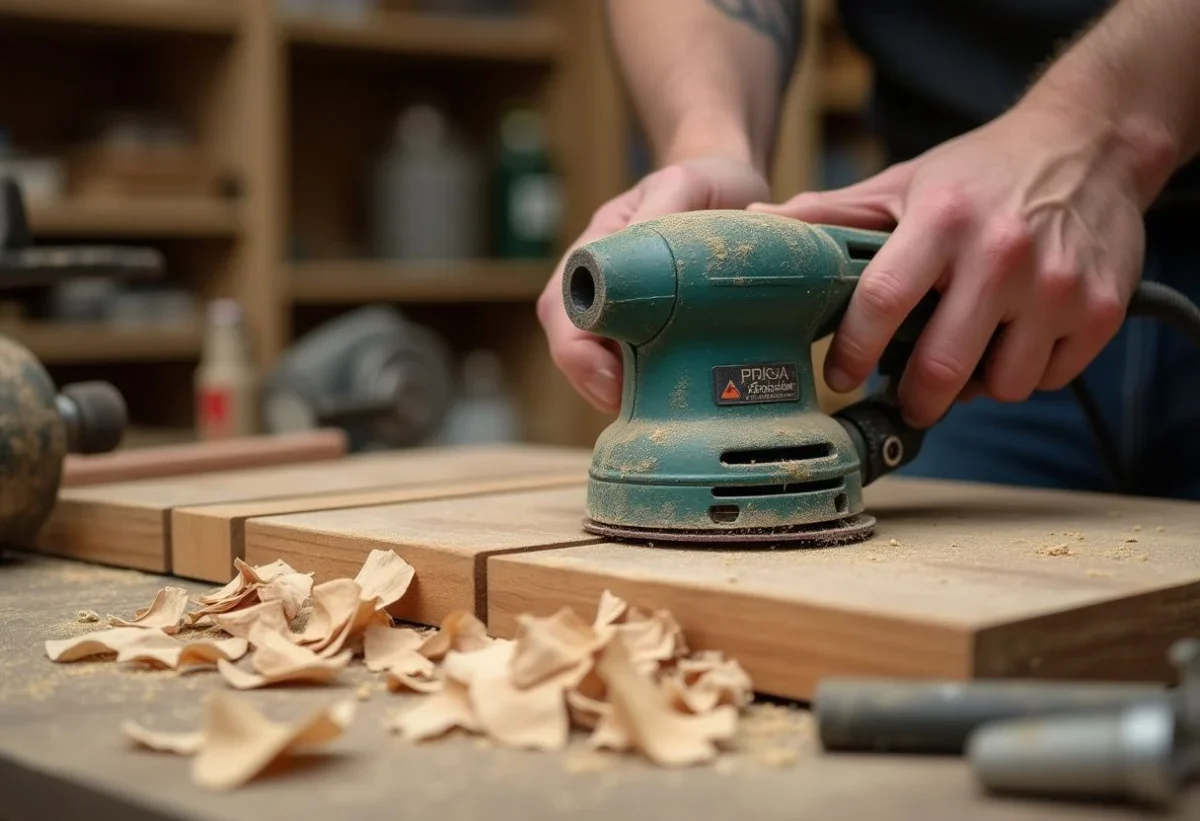
In the vast universe of DIY, there is a tool that, although modest in size and appearance, plays an indispensable role in completing various finishing tasks: the sanding belt. This essential component of belt sanders is known for its ability to smooth and polish various surfaces, ranging from wood to metal, including plastic. Whether you are a craftsman, a DIY enthusiast, or a professional in the industrial field, the sanding belt represents a key element in any project requiring a meticulous finish. Its varied composition gives it exceptional versatility, allowing it to meet specific needs, whether for renovation, construction, or maintenance work.
Composition and varieties of sanding belts
Sanding belts come in different formats and materials, each type having specific characteristics suited to particular uses. Understanding their composition helps in choosing the right model for each task.
At its core, a sanding belt consists of a flexible backing, often made of paper or fabric, to which abrasive grains are attached. This backing provides the necessary strength to withstand friction and wear. The abrasive grains can be made of aluminum oxide, silicon carbide, or other materials, with each type of grain affecting the performance and fineness of the cut.
- Aluminum oxide: primarily used for sanding wood, it is durable and economical.
- Silicon carbide: more suited for hard materials like metal, it offers a fast and clean cut.
- Ceramic: often used for industrial applications, it excels in longevity and efficiency.
Applications and uses in various fields
From carpentry to metallurgy, the fields of application for sanding belts are vast. Each sector uses these tools for specific tasks, demonstrating their versatility.
In the field of carpentry, sanding belts are crucial for smoothing wooden surfaces. They prepare the wood before staining or varnishing, ensuring a uniform and aesthetic finish. The ability to choose between different grits provides the necessary flexibility to work on rough or delicate surfaces.
In the metallurgical industry, they are used to remove rust, restore shine to metal surfaces, and prepare metal for further treatments. Fine-grit sanding belts are essential for achieving high-quality polishing.
Choosing the right sanding belt for your project
Given the diversity of sanding belts, selecting the ideal belt for your project may seem like a daunting task. However, a few simple criteria can guide this choice to ensure an optimal result.
- Type of material: identify whether you are working with wood, metal, or another substrate.
- Abrasive grit: coarser grits are suitable for material removal, while finer grits are perfect for finishing.
- Belt backing: choose a fabric backing for intensive sanding work and a paper backing for lighter tasks.
Maintenance and durability of sanding belts
Extending the lifespan of sanding belts involves regular maintenance and proper use. Careful maintenance ensures not only the longevity of the tool but also the consistent quality of the work performed.
To start, it is wise to regularly clean the belt with a special cleaning eraser that removes embedded residues. This prevents clogging that could impair the effectiveness of the abrasion.
Additionally, checking the condition of the backing and grains helps avoid premature wear. Replacing the belt at the first signs of degradation ensures optimal performance and prevents damage to the surfaces being worked on.