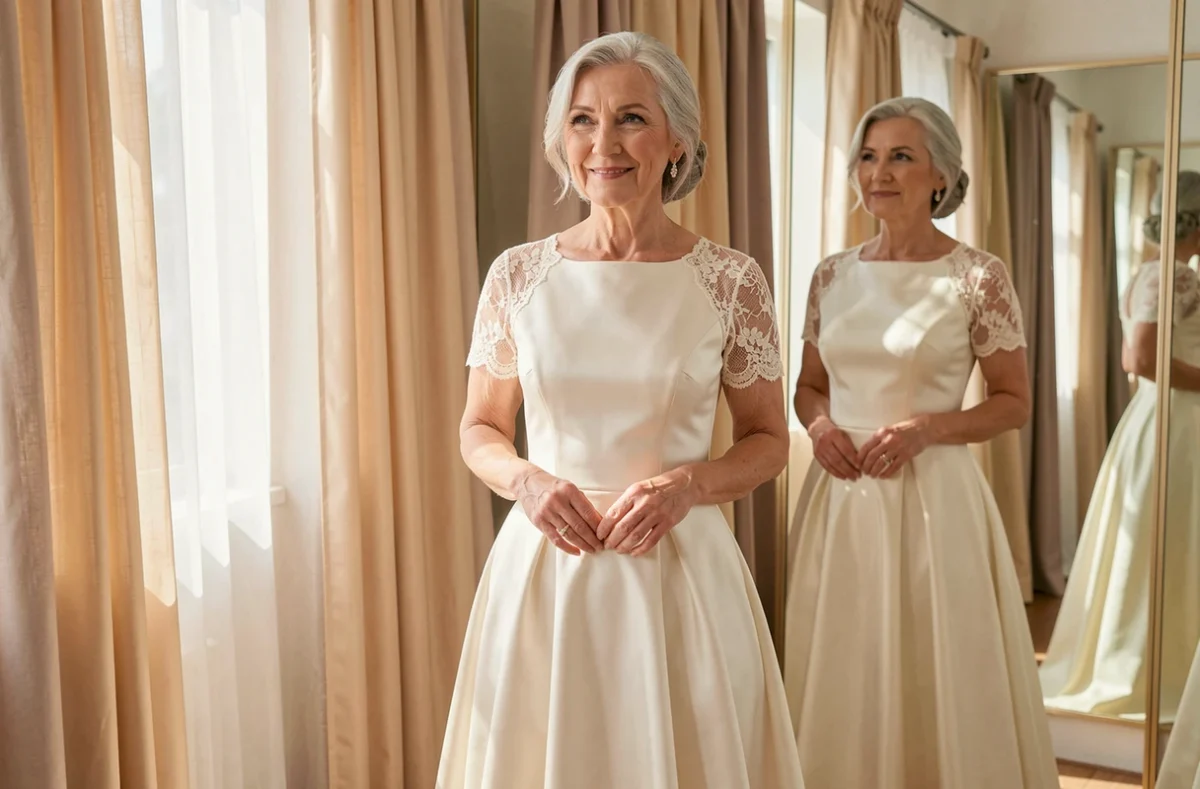
A wedding dress after 60 is chosen primarily based on technical criteria: fabric weight, cut amplitude, ease of putting it on. The mature silhouette has its strengths (upright posture, exposed shoulders, natural confidence) and its own comfort requirements.
Conventional guides often stop at morphology or color. They overlook what matters on the big day: standing for long periods, moving between the town hall and the reception venue, or simply going to the restroom without assistance.
Practical constraints of the ceremony: standing, movement, and autonomy
Most weddings require a long period of standing, sometimes over an hour just for the ceremony. At 60, the choice of dress directly affects endurance against fatigue. A train, even a short one, adds weight on the hips and complicates each step on uneven ground (gravel courtyard, garden grass, church cobblestones).
A light and short dress facilitates every movement throughout the day. The midi length, which stops below the knee, eliminates the risk of stepping on the hem and reduces the volume of fabric to manage when sitting. For civil ceremonies, this option is gaining popularity compared to traditional long dresses.
Access to restrooms remains a taboo subject in bridal fashion guides. A sheath dress with a back closure requires assistance to be partially removed. Two technical alternatives solve the problem: the wrap dress, whose cross construction opens at the front, and the two-piece set (structured top and separate skirt) that allows for removing the bottom alone. These solutions preserve autonomy without sacrificing style.
To choose a wedding dress for a 60-year-old woman, these functional details are as important as aesthetics: they determine whether the bride will truly enjoy her day.
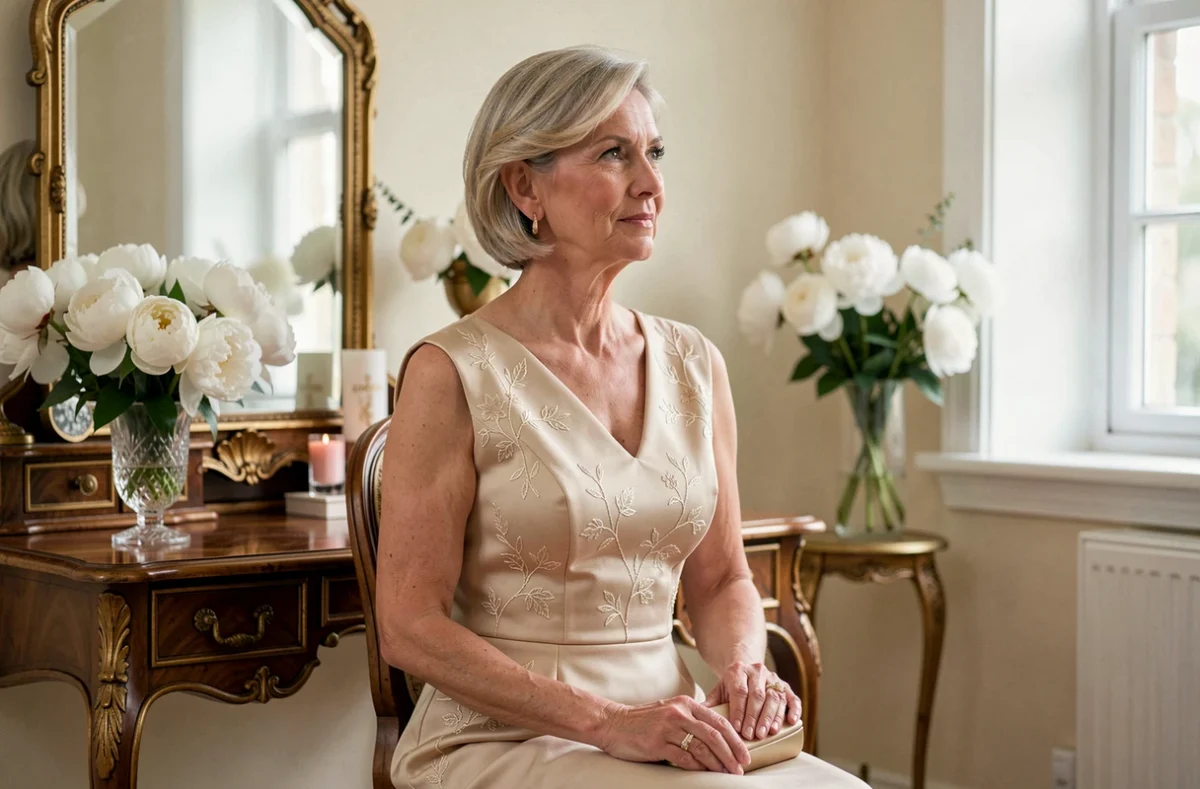
Flattering wedding dress cuts after 60: wrap, A-line, and straight cut
Three cuts stand out for their ability to combine elegance and comfort on a mature silhouette.
The wrap dress defines the waist without compressing the belly. Its cross-panel system creates an adjustable fit, avoiding rigid closures. Stylist Jennifer Heinen recommends this cut to blur the abdominal area while highlighting the waistline. In a midi version, it works well both at the town hall and in a garden.
The A-line cut starts from the shoulders and gradually flares out without constricting the hips or thighs. It is suitable for women who want to conceal the lower body while maintaining a clean structure on the bust. The natural drape of the fabric provides volume without excessive bulk.
The straight cut, or column cut, follows the body’s line without clinging. It works on both slim silhouettes and rounder shapes, provided a sufficiently fluid fabric is chosen. A thick crepe or stretch satin offers the necessary support without a shaping effect.
- Wrap: ideal for a civil wedding, adjustable, easy access. Prefer a midi length.
- A-line: suitable for long ceremonies with standing, does not restrict movement.
- Straight cut in crepe or stretch satin: streamlined, modern, requires few alterations if the size is well chosen.
Fabrics and colors for an elegant bridal outfit at 60
The fabric determines thermal comfort, perceived weight, and the dress’s hold over the hours. A summer outdoor wedding and a winter indoor ceremony call for different materials.
Crepe remains the most versatile fabric for mature brides. It doesn’t wrinkle, falls straight, absorbs sweat slightly, and forgives small cutting flaws. Stretch satin offers a brighter appearance with elasticity that facilitates movement. Lace, often limited to details (sleeves, neckline, back), adds texture without weighing down the silhouette when used in layering over a fluid lining.
Regarding color, pure white is not mandatory. Ivory, champagne, or blush tones better complement mature complexions. A powder blue or pearl gray are alternatives that assert a personal style without breaking the bridal spirit. For an intimate wedding, a dress in a nude or gold tone works perfectly.
Accessories and sleeves: details that change style and comfort
Arms are a common area of concern after 60. Three-quarter sleeves in soft crepe or light lace cover the upper arm without giving a strict appearance. They leave the wrist free, facilitating gestures (holding a glass, signing the registers).
A removable shawl or structured stole is a great alternative to a jacket. This type of accessory allows for adjusting shoulder coverage depending on the time of day: worn during the ceremony, removed for the meal, and put back on in the evening if the temperature drops.
- Three-quarter lace sleeves: cover without weighing down, suitable for religious ceremonies.
- Silk or lightweight cashmere stole: versatile, adds a touch of elegance without altering the dress.
- Discreet jewelry (dangling earrings, thin bracelet): enough to personalize a streamlined outfit without overloading it.
Shoes deserve as much attention as the dress. A block heel of a few centimeters offers stability on all surfaces. Open-toe pumps keep the foot cool during long receptions. Prioritizing foot comfort ensures enjoyment of the celebration until the end.
The current trend towards more intimate weddings and less formal attire gives 60-year-old brides real freedom. A fluid ivory crepe pant suit, a midi champagne dress worn with gold sandals, a blush silk suit: these options step outside the traditional framework while remaining perfectly suited for a union celebration. The right choice is one that allows for dancing, walking, and smiling without thinking about it.