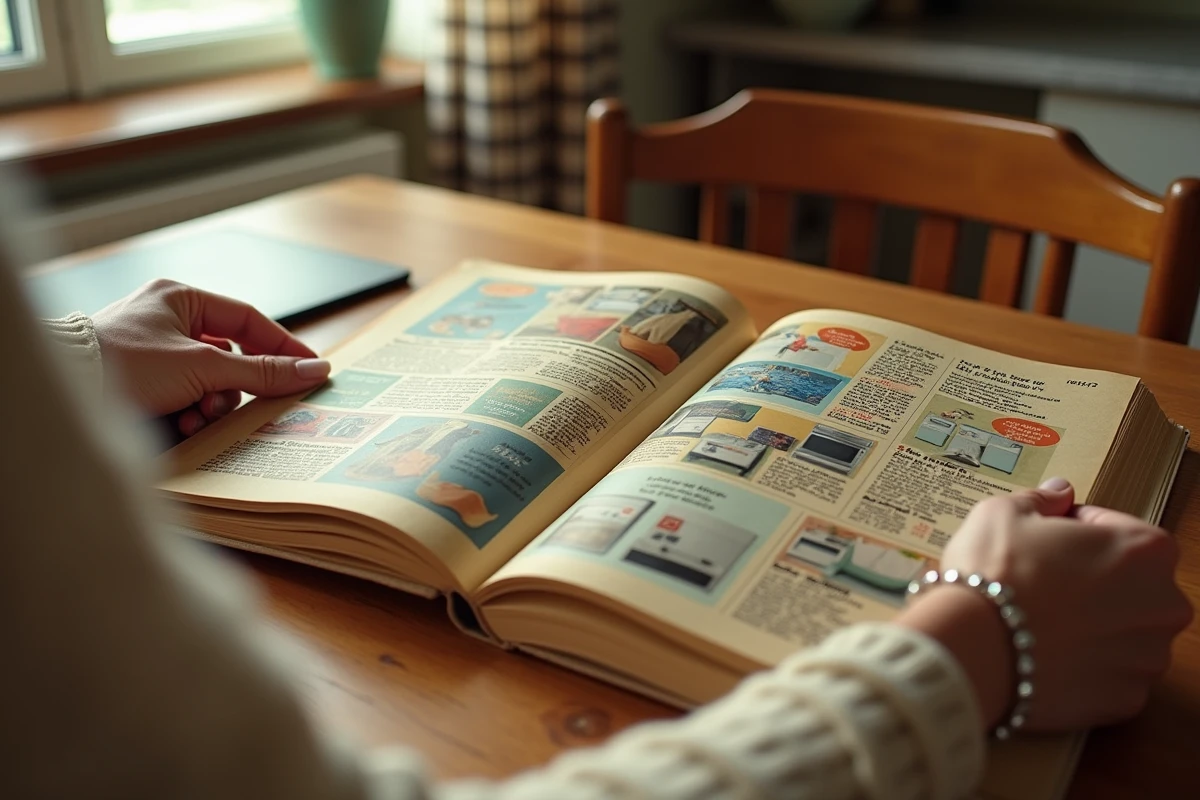
When searching to order an item by mail by typing “catalogue Quelle,” you come across pages that speak of the past. The Quelle catalogue, a massive reference for distance selling for decades, no longer exists in its paper form. Understanding why this giant disappeared and what has replaced it helps to better navigate the current landscape of distance ordering.
Quelle Brand After 2009: What the Otto Group Is Doing With It
Most articles on the subject stop at the bankruptcy filing in 2009. Rarely do they move on to what followed, which is the useful part for anyone looking to buy “from Quelle” today.
Since 2011, the Quelle brand has belonged to the German group Otto. Otto has occasionally relaunched sales operations under the Quelle banner, but only on online marketplaces, notably through Otto.de. No generalist paper catalog has been reintroduced.
In practice, Quelle now operates as a “nostalgia” label backed by Otto’s logistical infrastructure. The name appears on certain product ranges (appliances, textiles), but the model of the large family-flipped catalog has definitively disappeared. To trace the Quelle catalog and its evolution, we see that the transition occurred in several stages, from paper to digital, then from its own site to being attached to an existing marketplace.
The name “Quelle” is also protected as an active trademark with the EUIPO in classes related to retail and e-commerce. No third party can legally launch a “new Quelle catalog” without the holder’s agreement, which closes the door to any independent resurgence.
Why the Quelle Catalog Disappeared: The Regulatory Weight Rarely Mentioned
The rise of Amazon and the digital transition are often cited to explain the end of Quelle. These factors are real, but they do not explain why the paper catalog became economically untenable, even for players who wanted to maintain it.
The Hidden Cost of Mass Paper Prospecting
In France, the Hamon law on consumption (2014) and then the GDPR (applicable since 2018) have profoundly changed the rules of the game. The management of consent and the right to object have increased the cost of postal prospecting. Updating a database of postal addresses in accordance with these regulations represents an investment that the margins of paper distance selling could no longer absorb.
This point is rarely directly linked to the Quelle case in mainstream content, but it sheds light on the wave of printed catalog disappearances beyond just the German case. La Redoute made the same shift, abandoning its historic paper catalog to move to digital.
An Outdated Logistics Model
The paper catalog imposed a long production cycle: photography, layout, printing, postal shipping. Several months could pass between product selection and the catalog’s arrival in the customer’s mailbox. The displayed prices sometimes became obsolete even before the catalog reached mailboxes.
Online platforms update their prices in real-time, making the paper medium structurally less competitive, regardless of the quality of the products offered.
Alternatives to the Quelle Catalog: What Works According to Use
Rather than an exhaustive list of merchant sites, we can sort alternatives based on what one was actually looking for in the Quelle catalog.
- For accessible textiles and fashion: La Redoute and Bonprix occupy the historical niche of Quelle, with wide ranges, extended sizes, and installment payment systems reminiscent of traditional distance selling.
- For appliances and home equipment: generalist marketplaces (Amazon, Cdiscount) offer a comparable catalog depth, but the “editorial selection” aspect that made the paper catalog strong is lost. Feedback varies on this point, with some consumers preferring curation over abundance.
- For the nostalgia of flipping through pages: a few brands maintain seasonal paper catalogs (Cyrillus, Vertbaudet), but with much more limited ranges than Quelle offered at its peak.

Mail Order in 2025: What Has Changed for the Consumer
The shift from paper catalogs to e-commerce is not just a change of medium. Ordering habits have transformed deeply.
With a Quelle catalog, orders were placed by mail or phone, with delivery times often exceeding a week. The right to return existed, but the procedures were heavier. Today, delivery within 24 to 48 hours and free returns have become standards that any new player must meet to exist.
The Otto group, the current owner of the Quelle brand, applies these standards on its own platforms. The name Quelle survives, but in an ecosystem that has nothing to do with the one that saw its birth. Gustav Schickedanz, the founder of Quelle in 1937, built his success on access to products that were hard to find locally. This need has not disappeared, but it is now covered by a multitude of digital channels.
Mail order in its paper form will likely not return on a large scale. Regulatory, logistical, and economic constraints all point in the same direction. For those seeking the Quelle experience, the most direct reflex remains to go through Otto.de or through the French brands that have inherited this accessible generalist positioning.