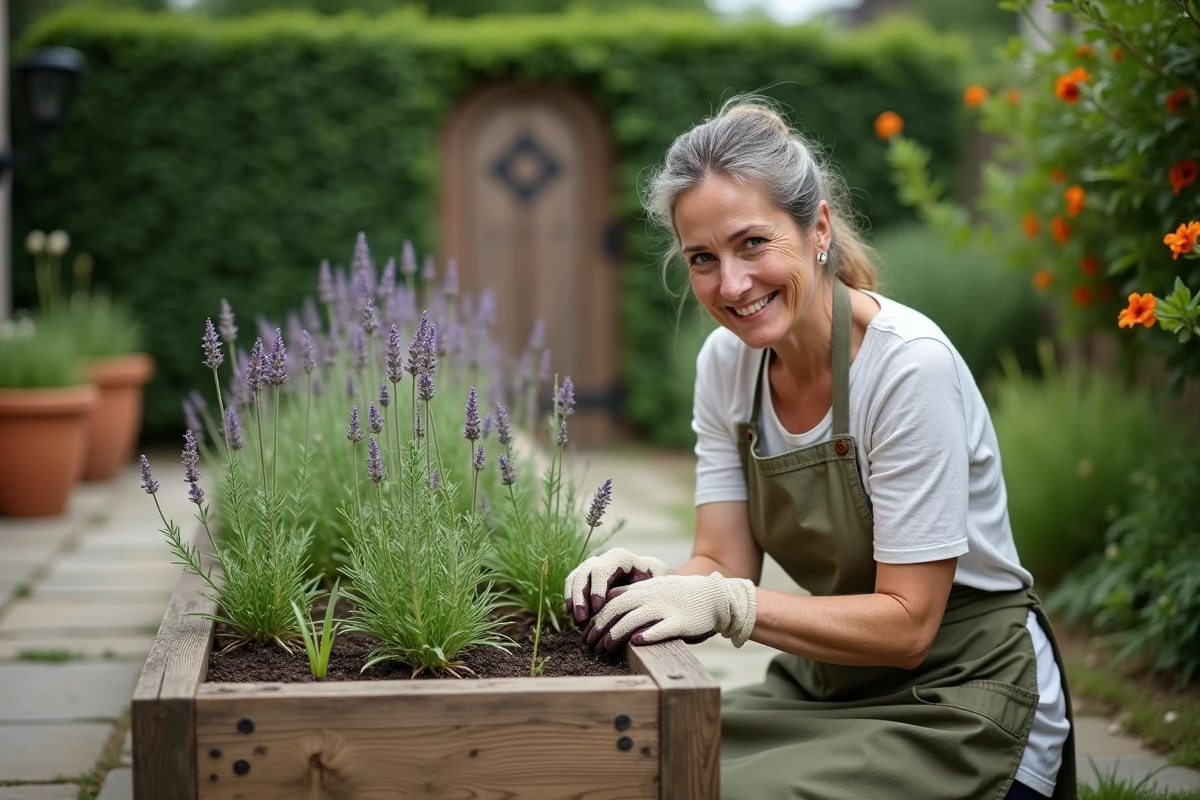
Clay soil that sticks to your boots in winter and cracks in July, a north-facing exposure behind the house, an outdoor tap subject to watering restrictions every summer: it is often from these constraints that a realistic garden project is born. Creating the garden of your dreams does not start in a magazine, but with your feet in the soil, observing what the local soil and climate truly allow.
Soil and exposure: the two parameters that decide everything
Before choosing any plants, we dig. A simple test involves taking a handful of moist soil and rolling it between your fingers. If it forms a stick that holds together, the soil is clayey. If it crumbles, it is sandy or loamy. This gesture of a few seconds guides the entire layout.
Clay soil retains water but easily becomes waterlogged: we install robust perennials (daylilies, perennial geraniums) and avoid lavenders, which rot in wet winters. Sandy soil drains quickly, which is suitable for Mediterranean plants but requires thick mulching to limit evaporation.
Exposure conditions the choice of plants as much as the nature of the soil. A north-facing facade sometimes receives less than two hours of direct sunlight in winter. We prioritize ferns, hostas, or hellebores rather than roses, which require at least four to five hours of sun. On envies-de-jardin.com, you can find plant selections sorted by growing conditions, which helps avoid common purchasing mistakes.
Garden design adapted to water restrictions
Water restriction orders are multiplying in France every summer, with watering limitations affecting a large part of municipalities. The Ministry of Ecological Transition notes a significant increase in drought orders since the mid-2010s. In this context, designing a water-intensive garden amounts to programming frustrations.
Replace the lawn with ground covers
The classic lawn is the most water-consuming element in a garden. It can be partially or completely replaced with persistent ground covers: creeping thyme, dichondra, dwarf clover. These plants form a green carpet without weekly mowing and survive on natural rainfall in most regions of France.
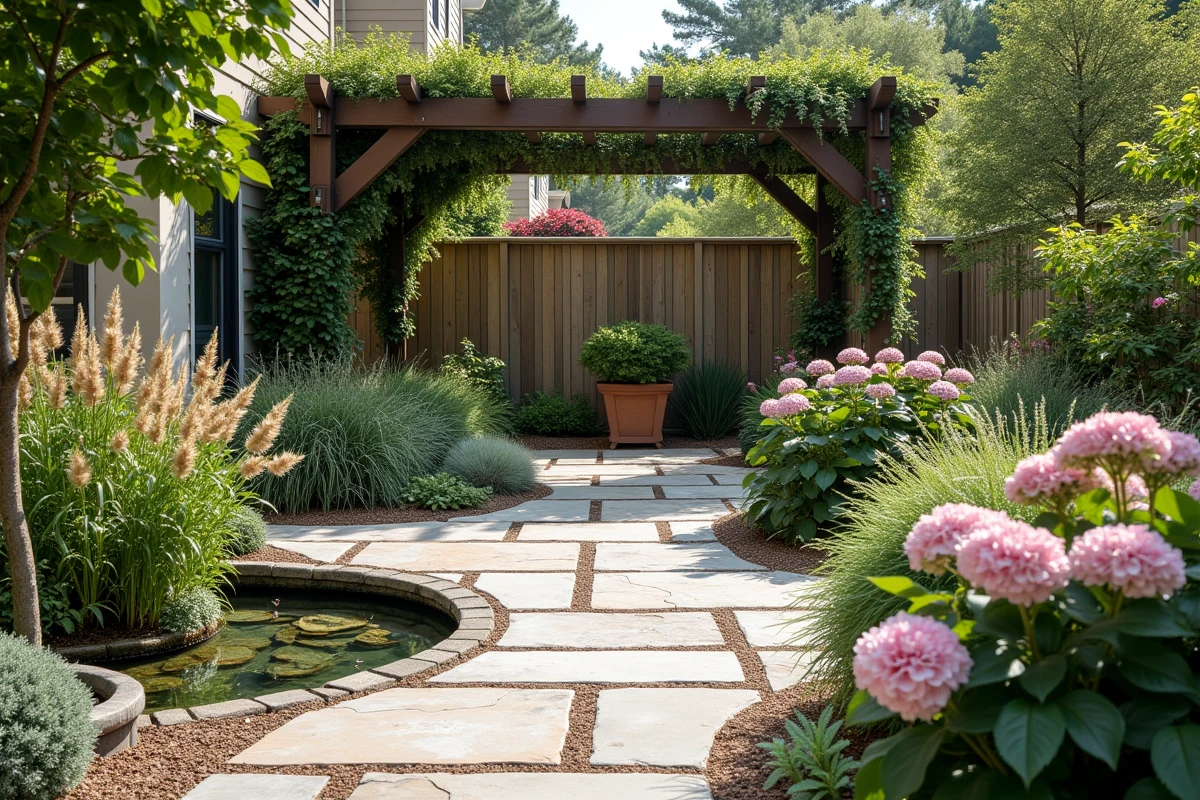
A lawn-free garden drastically reduces maintenance time and water bills. For pathways, we combine natural stone stepping stones with stabilized gravel, which prevents mud in winter.
Water recovery and mulching
Installing a rainwater harvesting tank connected to the gutters is the most cost-effective gesture in the long term. On the soil side, organic mulching (wood chip, buckwheat husks, hemp straw) retains moisture and nourishes the soil as it decomposes.
- Recommended mulch thickness: thick enough that the soil remains invisible, generally the width of a hand
- Renewal: once or twice a year depending on the decomposition speed of the chosen material
- Priority areas: base of shrubs, perennial beds, vegetable garden, recently planted hedges
Create shaded areas without waiting twenty years
Shade is a structuring element of the garden, not a disadvantage. With increasingly hot summers, creating a shaded space becomes a functional priority, not just aesthetic. The problem is that a tree planted today will take years to provide sufficient cover.
We can combine several strategies to obtain shade quickly. A shade sail stretched between the house and a post offers immediate results. A wooden pergola covered with star jasmine or virgin vine produces dense shade in two to three growing seasons.
For the long term, we choose a fast-growing tree suited to its soil: the plane tree (no fruit, broad foliage) works well in hot climates, while birch adapts to poor, cool soils. Planting a tree remains the most cost-effective investment in a garden project.
Garden planning over several years
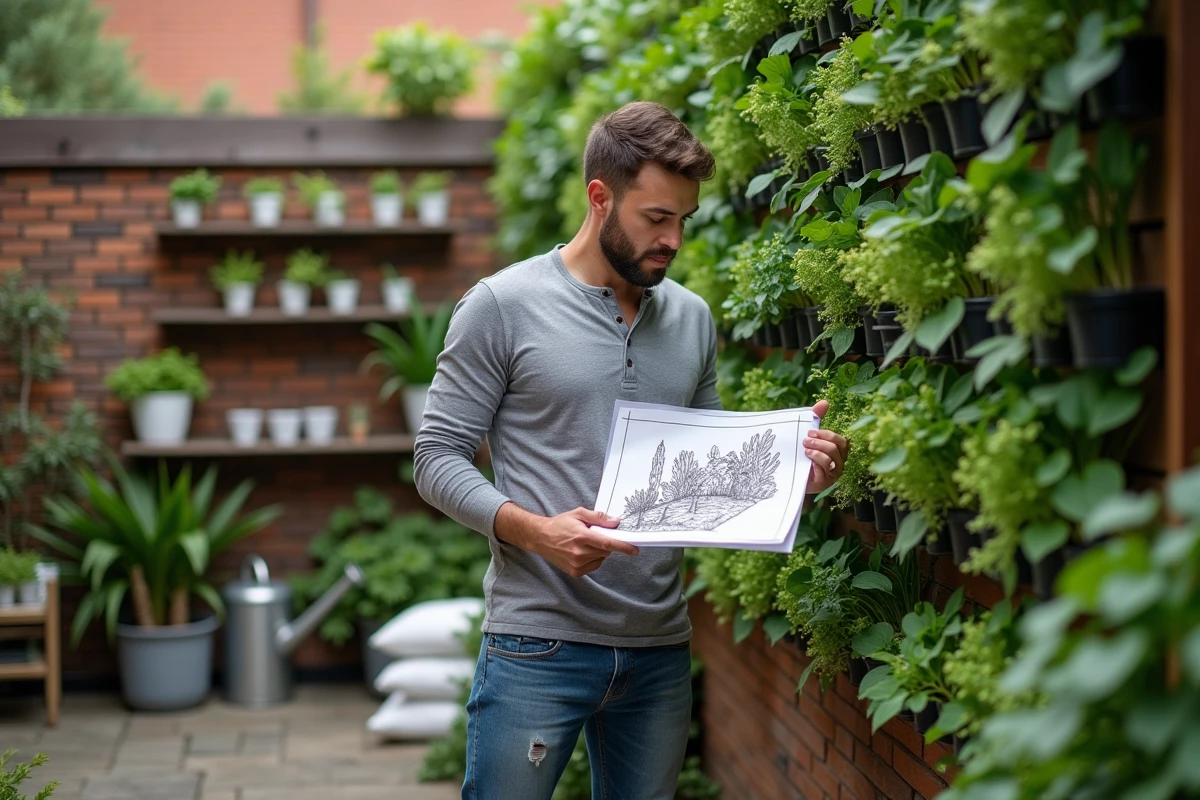
A garden is never completed in a weekend, and that’s a good thing. It is beneficial to plan the layout over two or three years, prioritizing the structural elements in the first year: fences, paths, main tree, potential water point. The perennial beds and finishing touches come later.
This gradual approach has a concrete advantage: it allows you to observe the terrain for a full year before finalizing choices. You can identify areas that remain waterlogged in spring, those that scorch in August, and places where the wind rushes in. This information is worth more than any plan drawn on paper.
- Year 1: earthworks, paths, planting of the main tree and hedges, installation of the irrigation system if necessary
- Year 2: perennial beds, vegetable garden, outdoor lighting
- Year 3: adjustments, replacement of plants that did not thrive, addition of furniture and decorative elements
A garden project spread over three years costs less than a single construction, because you spread out purchases and avoid costly placement errors. Returns vary on this point depending on the size of the land, but the principle remains the same: observe first, plant later.
The ideal garden does not come in a kit. It is built season after season, working with soil that has its limits, a changing climate, and a budget that you prefer to spread out. The best results rarely come from a perfect plan, but from regular attention to what grows, what thrives, and what deserves to be moved.