Jojoba is a liquid wax, not an oil in the strict sense. This biochemical particularity explains its affinity with human sebum, but also why finding a truly equivalent substitute requires thinking beyond just skin type. Lipid profile, oxidation resistance, actual comedogenicity index: we review the most relevant substitutes for jojoba oil for natural beauty care, focusing on what mainstream guides overlook.
Oxidative stability: the criterion most guides forget
Replacing jojoba with a conventional vegetable oil without checking its oxidation stability compromises the shelf life of the finished product. Jojoba resists oxidation remarkably well because its waxy esters contain almost no polyunsaturated fatty acids. Any alternative rich in omega-3 or omega-6 (hemp, rosehip, borage) degrades faster when exposed to light, heat, and residual oxygen in the bottle.
In practice, this means that an opened rosehip oil after three months may already show signs of rancidity, whereas jojoba remains stable for much longer. If you are formulating homemade facial care without synthetic preservatives, oxidative stability should take precedence over the fatty acid profile.
Oils rich in monounsaturated or saturated fatty acids offer a better compromise. Squalane, melted shea butter, and avocado oil are closer to jojoba on this criterion. For those looking for substitutes for jojoba oil in a sustainable formulation logic, this parameter should guide the choice above all else.

Plant squalane: the closest substitute to human sebum
Squalane replicates the lightness and non-comedogenicity of jojoba better than any traditional vegetable oil. Derived from olive or sugarcane, it is quickly absorbed without leaving a noticeable greasy film. Its comedogenicity index is very low, making it suitable for oily and reactive sensitive skin.
Where jojoba acts as a sebum regulator due to its waxy structure, squalane works through direct lipid mimicry. The skin recognizes it as an endogenous component, which reduces the risk of reaction. We recommend squalane as the first choice for oily serums intended for combination to oily skin, or as the oil phase in a light balm.
A point of caution: squalane does not provide significant amounts of polyunsaturated fatty acids or vitamin E. It nourishes and protects the skin barrier but does not fulfill the reparative function that some richer vegetable oils provide.
Avocado oil and shea butter: for dry and mature skin
For skin that needs deep nourishment, jojoba is not always sufficient. Two alternatives stand out for their lipid density and tolerance.
Organic avocado oil for the face
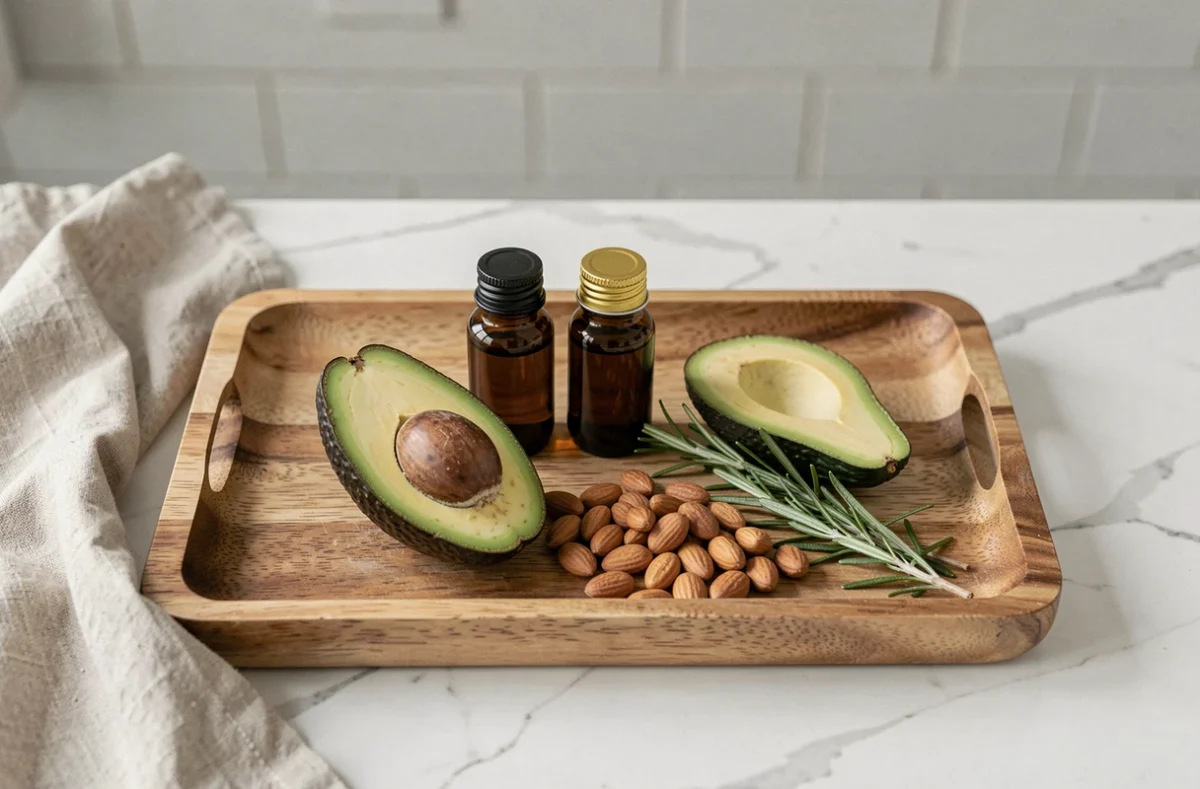
Avocado oil concentrates monounsaturated fatty acids, phytosterols, and carotenoids. It penetrates the upper layers of the epidermis without excessively clogging the pores. Its richness in oleic acid makes it more nourishing than jojoba for dehydrated or cold-damaged skin.
It stores well due to its predominantly monounsaturated profile, bringing it closer to jojoba in terms of stability. We willingly use it as a base in winter facial balms.
Shea butter for body and hair care
Shea butter is not a liquid oil, but its high unsaponifiable fraction gives it documented anti-inflammatory and reparative properties in traditional cosmetics. It replaces jojoba in thick body care (body butters, hair masks) where fluidity is not required.
On dry or frizzy hair, shea butter seals in moisture more effectively than jojoba. However, it is too rich for a facial serum intended for combination skin.

Actual comedogenicity and skin tolerance: beyond theoretical indices
Comedogenicity index tables circulate everywhere, but they are based on old tests conducted on rabbit ears, not on human skin in vivo. A low index does not guarantee the absence of reaction. Sweet almond oil, classified as low comedogenic, can cause contact dermatitis in someone allergic to nuts. Conversely, coconut oil, known for being comedogenic, is perfectly tolerated by some skin types.
We recommend testing any new oil on a small area of the face for several days before incorporating it into a full routine. This empirical approach remains more reliable than any theoretical table.
Here are the concrete criteria to evaluate before choosing a substitute:
- Fatty acid profile: monounsaturated for stability, polyunsaturated for reparative action, depending on the care objective
- Absorption speed: squalane and jojoba penetrate quickly, avocado and shea remain longer on the surface
- Potential allergens: oils from nuts (sweet almond, hazelnut) present a cross-risk for allergic individuals
- Storage conditions: an oil sensitive to oxidation requires an opaque bottle, a cool place, and quick use after opening
Adapting the substitute to the type of formulated care
The choice of substitute depends less on skin type than on product type. An oily facial serum does not require the same properties as a lip balm or hair mask.
- Facial serum for combination skin: plant squalane, possibly mixed with a few drops of hemp oil for omega supply
- Nourishing body balm: shea butter combined with organic avocado oil
- Care for dry hair: avocado oil or shea butter as a pre-shampoo mask
- Oily makeup remover: squalane offers the best compromise for rinsing and tolerance
Jojoba remains a versatile reference, but no single oil covers all uses. Segmenting your care by need and choosing the best-suited alternative for each formula yields better results than a systematic replacement with a single product.