
Every year, Brittany attracts a growing number of couples who want to get married overlooking the ocean, in a stone manor house or in the heart of a restored longère. The region’s wedding planning market has expanded, with a wide range of professionals: day-of coordinators, full-service planners and decorators who have changed careers.
This variety makes choosing a planner harder than it might seem. The usual criteria (portfolio, client reviews and location) are widely covered online. Less often discussed, however, are how a wedding planner handles the logistical challenges specific to Brittany, how clearly they define the scope of their services and what a site visit reveals.
Wedding venue site visit: the test few couples ask for
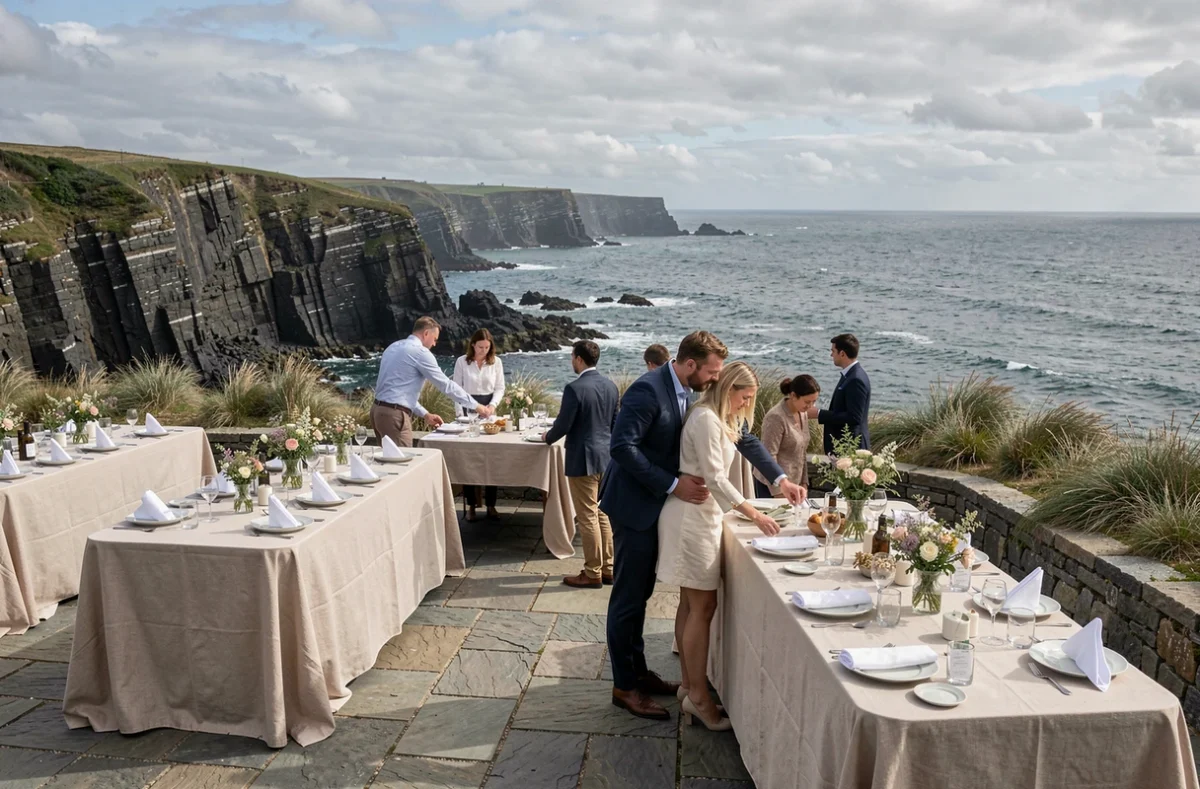
Before signing with a wedding planner, suggest visiting your chosen venue together. This step reveals more about an experienced professional than any portfolio. And there’s more at stake during the visit than just aesthetics.
An experienced planner will instinctively spot practical constraints: access times and the curfew imposed by the owner, parking for vendors, the caterer’s unloading area, and what equipment is included or needs to be hired. They’ll also identify backup options in case of rain and assess whether they’ll actually work for the number of guests you’re expecting.
If the planner only comments on the setting without bringing up these practical details, take note. Organizing a wedding in Brittany is as much about managing the flow of guests, vendors and equipment as it is about décor. agenceemeraudemariage.com is one of the wedding planning agencies in Brittany that factors in these logistical considerations from the very first conversations with couples.

Rain plan in Brittany: a procedure, not just an indoor backup venue
Most articles recommend having a Plan B in case of bad weather. It’s good advice, but incomplete. An effective rain plan is a complete procedure, not just a backup room.
Three questions can help you assess how thoroughly a wedding planner has thought this through:
- Who decides to move the event indoors, and at exactly what point in the day? If the answer is vague (“we’ll see in the morning”), the risk of confusion on the day increases.
- How and how quickly will vendors (caterer, musicians, photographer) be informed of the change in setup?
- Will the change involve extra costs (additional furniture hire, rearranging the room, extra labor hours)? A transparent wedding planner will estimate these potential costs in advance.
The venue’s microclimate matters just as much as the season. Two venues in Brittany an hour’s drive apart can have very different conditions on the same day. Checking sheltered areas in person is more useful than relying on the season alone. A planner who knows the region will be able to tell the difference between a site exposed to coastal gusts and one sheltered by a wooded valley.
Scope of services: day-of coordination or full-service planning
Service descriptions vary from one vendor to another, with no official standard. “Day-of coordination” can mean anything from simply managing the schedule to taking charge of logistics from the day before through the day after. “Full-service planning” may or may not include finding the venue, managing the budget and selecting every vendor.
Ask for a written document detailing every task included in the package. Points to clarify before signing:
- Will the wedding planner handle vendor follow-ups and payments, or only recommend vendors?
- Is creating the planning timeline included, or charged as an extra?
- Is there a limit on the number of meetings included? Some packages cap the number of meetings, with the rest of the communication handled by email.
- Are trips to the venue included in the fee, or charged by the mile? For a wedding in Finistère with a planner based in Rennes, this can have a real impact on the budget.
A detailed, itemized quote protects both parties. If the document is vague about the scope of services, it’s often because the vendor hasn’t formalized their processes.
Local vendor network: what it tells you about a wedding planner
A wedding planner who has been based in Brittany for several years will have built a network of vendors they’ve worked with at previous weddings. This network is part of the value they bring, but it’s worth asking questions rather than accepting their recommendations without question.
Ask whether recommended vendors pay the wedding planner a commission. This practice exists and isn’t inherently improper, but being transparent about any commissions is a sign of professionalism. Informed couples can compare quotes freely.
Also check how diverse the network is. A planner who always recommends the same caterer, photographer and florist for every wedding is effectively limiting your options. By contrast, a professional who tailors recommendations to the couple’s style, chosen venue and stated budget demonstrates a deep understanding of the local scene.
Client reviews and portfolio: read between the lines
Online reviews offer an initial indication, but they mostly reflect the emotional experience of the wedding day. To assess how well a planner handles the practical side, ask to speak directly with one or two former clients. The most revealing questions are about how they handled unexpected issues, whether they stayed within the original budget and how responsive they were during the busiest stages of planning.
A portfolio shows visual style. It says nothing about the planner’s ability to handle a late caterer or a generator failure. A wedding planner’s logistical skills can’t be photographed.
Ultimately, choosing a wedding planner in Brittany comes down to details that rarely appear on agency websites: a precise quote, a thorough rain plan, transparency about vendor commissions and the ability to anticipate the challenges of a specific venue. Asking these questions at your first meeting can quickly help you distinguish between planners, before you even start talking about décor or color palettes.