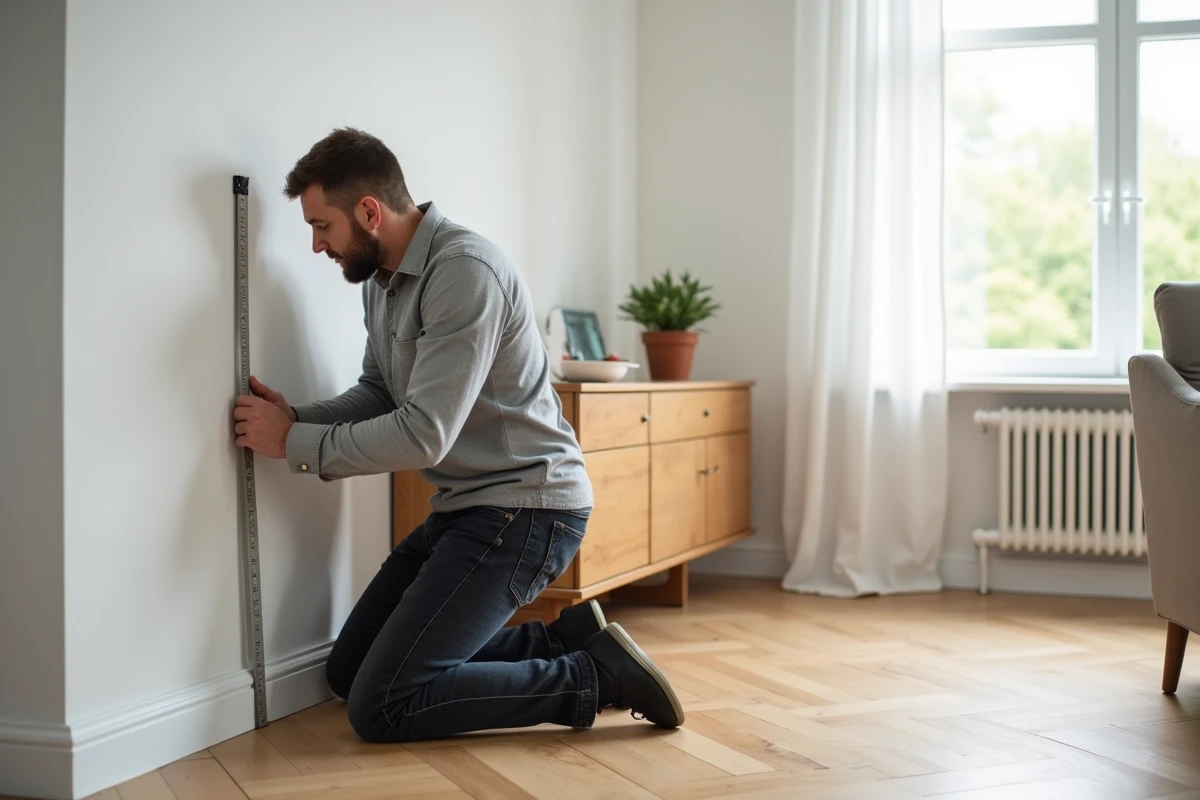
Have you ever tried to push a dresser against the wall, and it refuses to sit flush because of the protruding baseboard? This slight offset creates an annoying gap and, more importantly, a risk of tipping over. Securing a piece of furniture to the wall with a baseboard requires a method suited to the type of wall, the profile of the baseboard, and the weight of the furniture.
Moisture under PVC baseboard: the invisible trap before any installation
Before drilling or screwing anything, check the condition of the wall behind and under the baseboard. In recent constructions, particularly those built after 2023, tradespeople report an increase in installation failures related to residual moisture trapped under PVC baseboards.
PVC does not breathe. Construction water or condensation gets trapped between the wall and the baseboard, weakening the anchoring area. A moisture test with a strip before drilling avoids unpleasant surprises. If the wall feels damp to the touch or if the strip changes color, let it dry for several days with the baseboard removed before securing it.
This check takes two minutes and saves you from a piece of furniture that detaches from the wall after a few weeks. To delve deeper into each step of the installation, you can secure a piece of furniture to the wall with a baseboard on Officiel News where the complete process is detailed.
Self-drilling anchor or Molly anchor: which anchoring to choose with a baseboard
The choice of anchor depends on the wall, not the furniture. With a baseboard preventing the furniture from touching the wall, the high fixing point (in the upper third of the furniture) bears almost all of the pulling force. Therefore, the anchor must withstand a shear force greater than in a standard configuration.
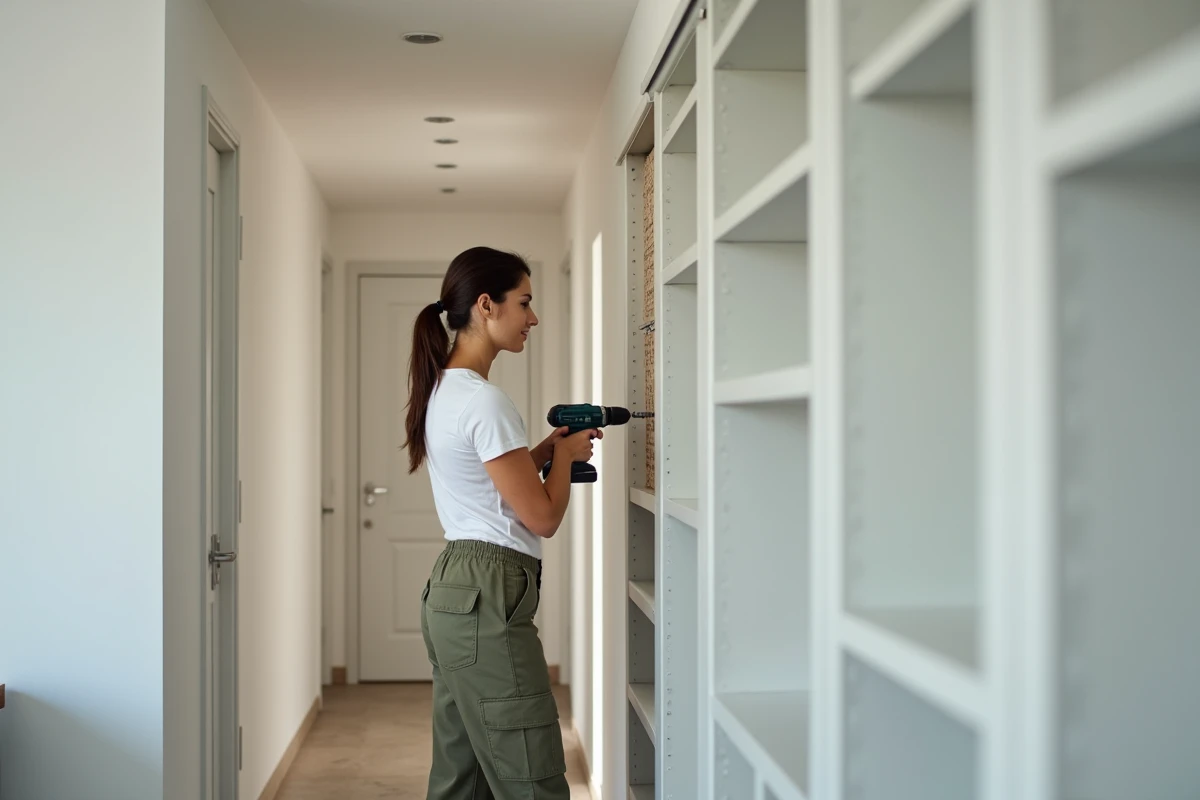
According to a comparative test conducted by UFC-Que Choisir in March 2026, self-drilling anchors offer about 30% better holding power compared to Molly anchors on drywall with irregular baseboards. They do not require pre-drilling, which simplifies the work when working above a raised baseboard.
Molly anchors remain relevant on standard, well-planned drywall. Their expansion behind the board provides good resistance to pulling out. However, on an irregular or slightly damp wall, the self-drilling anchor is more forgiving of defects.
Solid wall or hollow wall: adapt the fixing
On a solid brick or concrete wall, a standard hammer-in anchor is sufficient. On drywall or plasterboard, prefer an expansion anchor. Always drill above the baseboard line, never into the baseboard itself, which cannot support any mechanical stress.
Shimming the furniture without cutting the baseboard: three practical methods
Cutting the baseboard is the cleanest solution, but not always possible. In rental properties, it is prohibited without the landlord’s agreement. And on a molded solid wood baseboard, the joint after cutting remains visible.
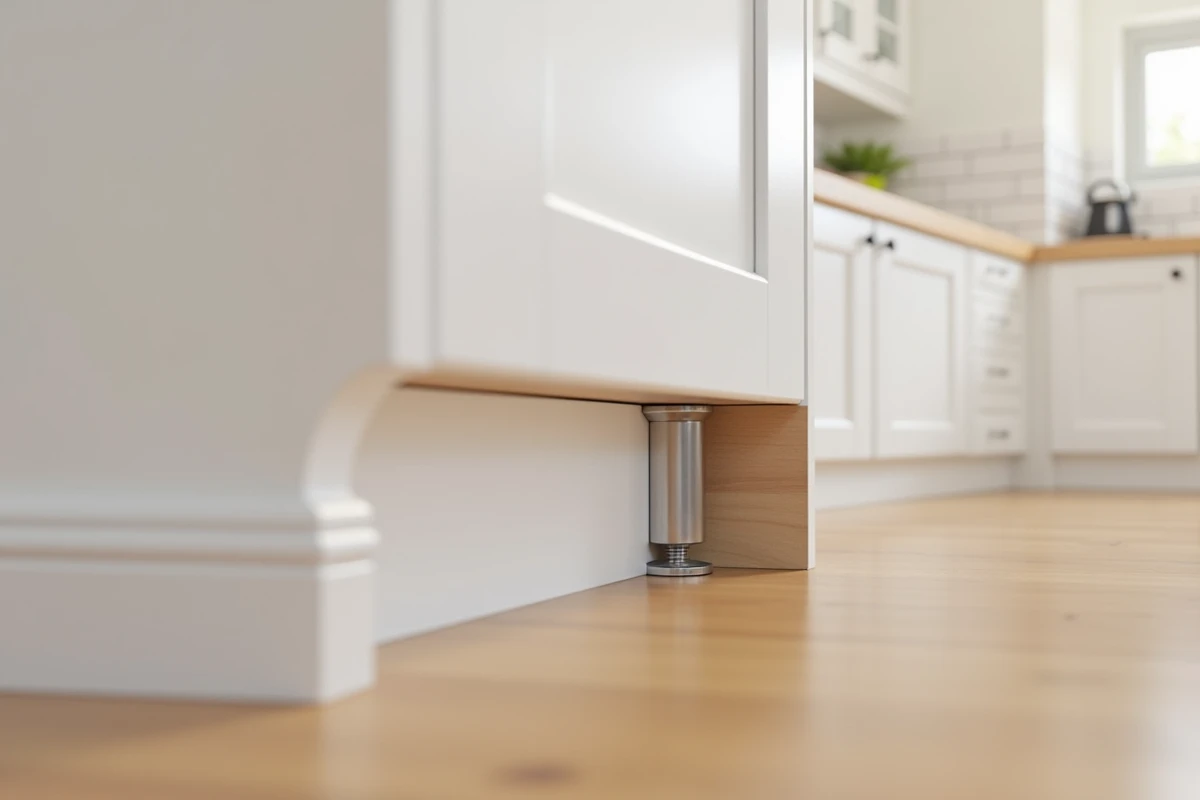
- A wooden or MDF shim, fixed to the floor in front of the furniture, compensates for the offset created by the baseboard and stabilizes the base. Cut it to the exact width of the furniture for a discreet result.
- A rear spacer screwed into the back of the furniture, at the height of the baseboard, fills the gap and allows the furniture to rest on two points: the baseboard below and the wall above. The spacer must have the same thickness as the baseboard to keep the furniture level.
- The high fixing with a metal bracket, screwed into the wall above the baseboard and into the top of the furniture, secures the furniture in case of tipping. This is the recommended method for tall furniture, especially in a household with children.
You can combine these approaches. A shim at the bottom and a bracket at the top provide stability comparable to a piece of furniture pressed directly against the wall.
Anti-tipping fixation for tall furniture: what the regulations say
Since January 2026, France has imposed a strengthened obligation to certify anti-tipping fixation for any furniture over one meter high in family homes. This measure, stemming from a decree published in the Official Journal in December 2025, aims to reduce domestic accidents related to furniture tipping over.
Professional installers who do not comply with this requirement face fines. For individuals, no direct penalties are provided, but in the event of an accident, the absence of fixation may engage the civil liability of the owner or landlord.
What this changes for a DIYer
The anti-tipping bracket provided with most flat-pack furniture becomes a safety element to be installed systematically, not an optional accessory. Secure the bracket into a stud or in a solid wall area, not into bare drywall without an appropriate anchor.
If your furniture does not come with a bracket, obtain an anti-tipping strap or a steel L-bracket. Screw one side into the wall (with the appropriate anchor for the support) and the other into the furniture structure, ideally into a reinforced back panel or a side stud.
Invisible magnetic fixings: an option for renters
Magnetic fixing systems allow you to hold a piece of furniture against the wall without visible drilling or removing the baseboard. The principle relies on magnetized plates glued to the back of the furniture and the wall, which attract each other through the gap left by the baseboard.
This solution is suitable for lightweight and low-stress furniture, such as an entry console or a small TV stand. For a bookshelf loaded with books or a cabinet, the magnetic force is not sufficient to ensure anti-tipping safety. Reserve this option for situations where drilling is truly excluded.
The baseboard remains the detail that no one anticipates when buying the furniture. Take its dimensions (height and thickness) before choosing your fixing method. A well-shimmed piece of furniture at the bottom and securely anchored at the top with a bracket suitable for the wall support will not move, regardless of the thickness of the baseboard.